
Sleep Apnoea & Snoring
Sleep better, live better (and so does your partner)
If you snore at night, wake up tired even after eight hours of sleep, or someone close to you has said you stop breathing while asleep, you may have sleep apnoea. It's a far more common problem than it seems, and the solution can be simpler than you imagine.
years of experience in Valencia
in complex cases
first consultation, no commitment
payment options for you
What are sleep apnoea and snoring?
Snoring and sleep apnoea are two sides of the same problem: during rest, the airway narrows or partially blocks, causing vibrations (snoring) or complete interruptions in breathing (apnoeas). These pauses can last several seconds and repeat hundreds of times a night, preventing you from reaching the deep-sleep stages your body needs to recover. The result isn’t just the noise that bothers your partner. It’s the feeling of not having rested, the chronic fatigue, the lack of daytime concentration and, in the long run, an increased risk of cardiovascular problems. Many patients who come to our clinic have lived with this exhaustion for years without knowing it has a solution, and one that is simpler than they imagined.
Snoring isn’t normal. And neither does tiredness have to be.
- Certified specialists in dental sleep treatment. Dr. Jorge Utrilla holds specific certification in Mandibular Advancement Devices, the most effective dental treatment for snoring and mild to moderate apnoea. It’s not something we do occasionally: it’s one of our specialties.
- Our own sleep study at the clinic. We have our own technology to carry out the sleep study, something very few dental clinics in Valencia can offer. This lets us diagnose precisely what happens during your rest and design the most suitable treatment for your specific case, without you having to go elsewhere.
- Medical backing within the same clinic. The maxillofacial surgeon on our team endorses the diagnostic report and ensures the approach is always the right one. In cases that require it, we also work in coordination with specialist pulmonologists.
- We measure results before and after. Thanks to the sleep study we can compare your situation before and after treatment objectively. You don’t have to rely on how it feels alone: the data confirms the improvement. And that before and after speaks for itself.
How do I know if I have apnoea or just snore?
It isn’t always easy to tell without a study. But there are signs that give very clear clues. If you recognise any of these situations, it’s worth telling us:
| Sign | What it may mean |
|---|---|
| Loud, frequent snoring | The airway narrows during sleep |
| You wake up tired even after enough sleep | Sleep is fragmented by apnoeas and isn’t restorative |
| Your partner notices you stop breathing at times | A clear sign of obstructive sleep apnoea |
| Daytime sleepiness or difficulty concentrating | A direct consequence of non-restorative sleep |
| Headaches when you get up | Apnoeas can cause a drop in oxygen during the night |
| A feeling of choking or gasping on waking | The body reacts to the breathing interruptions |
| Dry mouth or sore throat in the mornings | Night-time mouth breathing associated with snoring |
How do we carry out the study and treatment?
The first thing we do is understand your case. We don’t start treating without knowing exactly what’s happening. So when a patient arrives with snoring or suspected apnoea, we always follow this process:
- First visit and assessment. We analyse your history, your symptoms and the state of your mouth and jaw. We explain what options exist and assess whether a sleep study is needed to fine-tune the diagnosis.
- Sleep study. With our own technology we record what happens while you sleep: how many apnoeas occur, how long they last and how they affect your oxygenation. With that information, we know exactly what we’re dealing with.
- Diagnosis with medical backing. Our clinic’s maxillofacial surgeon endorses the report. In cases that require it, we work in coordination with specialist pulmonologists to guarantee you the best possible care.
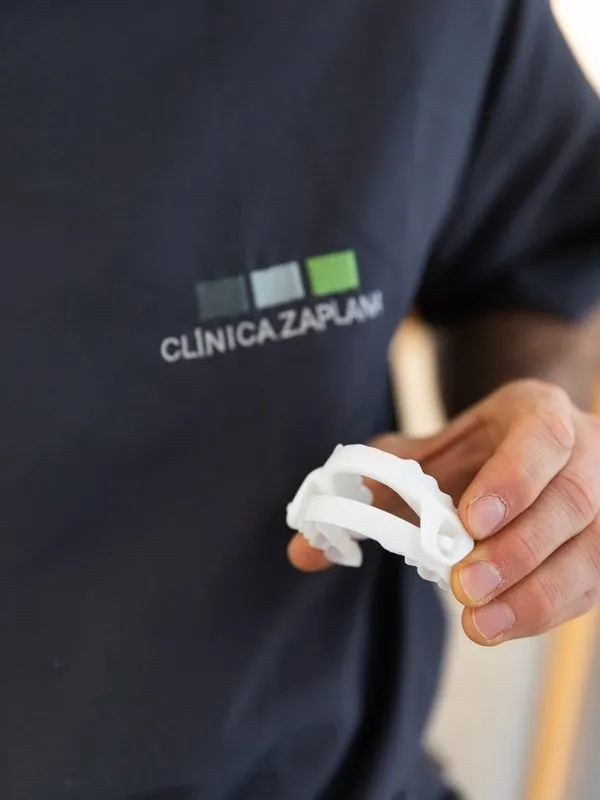
- Custom MAD device design. If your case is compatible with dental treatment, we take precise measurements to make your personalised Mandibular Advancement Device (MAD). The MAD slightly advances the jaw during sleep, keeping the airway open and eliminating snoring and apnoeas. It’s small, discreet and far more comfortable than you imagine.
- Fitting and adjustment. When you receive the device, we book you in to make sure it fits perfectly and is comfortable from the very first moment. The first few days of adaptation are very manageable, and most patients tell us they were surprised by how little it bothers them.
- Follow-up and result verification. We review progress and, if needed, repeat the sleep study to measure the results objectively. The before and after is the proof that the treatment has worked.
Dudas frecuentes sobre sleep apnoea & snoring
Is the MAD device uncomfortable?
It's the question we're asked most, and the answer we're happiest to give: no. The MAD is made entirely to measure and the vast majority of patients adapt within a few days. It's small, discreet and doesn't interfere with rest once you get used to it.
Can the dentist treat sleep apnoea?
Yes, and it's more common than you think. Dental treatment with mandibular advancement devices is recognised as one of the most effective solutions for mild and moderate apnoea, and for simple snoring. At our clinic we have the certified team and the technology to support you throughout the process.
How do I know if my case needs a MAD or a CPAP?
It depends on the severity of the apnoea. CPAP is the usual treatment in severe cases, while the MAD is the more comfortable and effective alternative for mild and moderate cases. That's why we carry out the sleep study: to recommend exactly what you need, no more and no less.
Is the treatment only for stopping snoring?
No. Snoring is the most visible symptom, but apnoea has a real impact on your quality of life: chronic fatigue, lack of concentration, irritability and long-term cardiovascular risk. Treating apnoea means regaining energy and wellbeing, not just removing the night-time noise.
Do I need my doctor to refer me first?
It's not essential. You can come directly to our clinic and we carry out the initial assessment. If your case requires it, we work with collaborating pulmonologists and our maxillofacial surgeon provides the medical backing needed for the diagnosis.
How much does the treatment cost?
It depends on the case and the treatment you need. At the first visit we explain the full process and give you a detailed, no-obligation quote, so you can decide with all the information on the table.
Our specialists in sleep apnoea & snoring
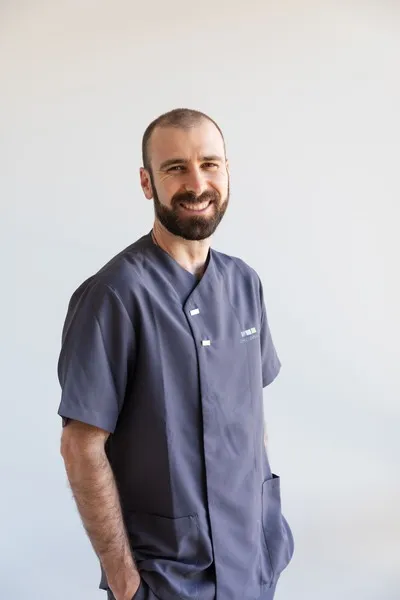
Your treatment is handled by a doctor who specializes in sleep apnoea & snoring, trained specifically in this field and ready to handle the most complex cases.
Articles about sleep apnoea & snoring
What our specialists say about this treatment.