
Paediatric Dentistry
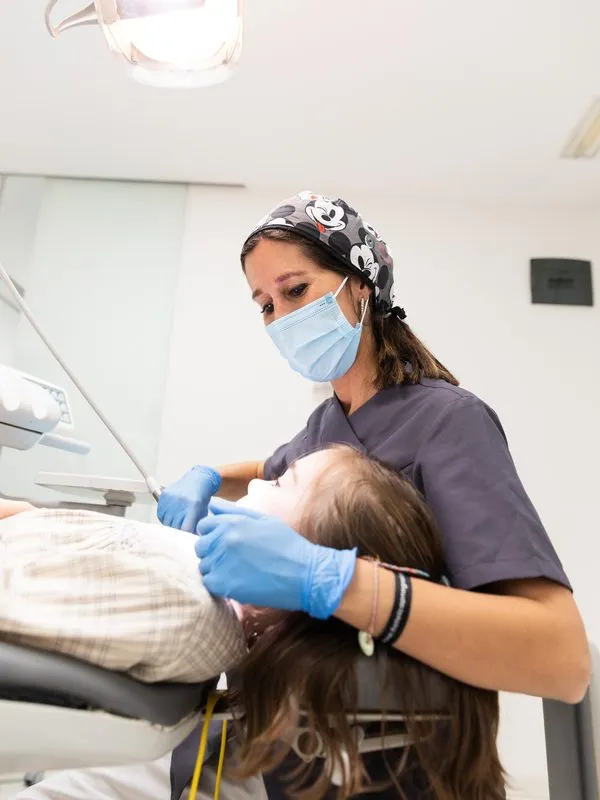
A child's first visit to the dentist should be a happy memory.
At Clínica Zaplana we guide children from their very first visit with a preventive, friendly and fear-free approach. Check-ups, sealants, fluoride and early detection of problems before they get complicated.
years of experience in Valencia
in complex cases
first consultation, no commitment
payment options for you
Why is it important to look after your child’s mouth from an early age?
Baby teeth aren’t temporary in the sense that they don’t matter. They are the foundation on which the permanent dentition is built: they hold the space for the permanent teeth, help with the development of speech and chewing, and their health directly influences how the adult dentition comes through. An untreated cavity in a baby tooth can have real consequences years later. What’s more, childhood is when habits are formed. A positive first experience at the dentist makes the difference between an adult who comes for check-ups without a problem and one who has spent years avoiding the clinic out of fear. That’s why, in our practice, we take that first visit just as seriously as any treatment.
A healthy adult mouth starts with a well-supported childhood.
- A preventive approach from the start. We don’t wait for a problem before acting. With regular check-ups, fissure sealants and fluoride applications, we work so your child’s teeth grow up healthy and we avoid more complex treatments in the future.
- A first visit without fear. We know the first experience matters a great deal. That’s why we take all the time needed for the child to get to know the surroundings, understand what we’re going to do and feel comfortable. No rushing, no forcing and explaining every step before taking it.
- Early detection of problems. Many problems with orthodontics, the bite or jaw development are far simpler to correct if caught in time. At paediatric check-ups we also assess how the child’s mouth is developing as a whole, not just whether there are cavities.
- We support parents too. We know parents have questions: when to change the toothbrush, whether the dummy is affecting the bite, when to worry about the gaps between teeth. We answer all those questions in the same visit, so the right things can be done at home as well.
When should I bring my child to the clinic?
There’s no need to wait for pain or a visible problem. These are the situations where we recommend not putting it off:
| Situation | Why it’s a good moment |
|---|---|
| They’ve turned 2 or 3 | First preventive check-up: assessing the state of the baby teeth and letting the child get to know the clinic without pressure |
| You see dark marks or colour changes on the teeth | This can be the start of a cavity that’s best treated before it advances |
| The permanent teeth start coming through (around age 6) | The ideal moment to place fissure sealants and carry out the first orthodontic assessment |
| They use a dummy or suck their thumb frequently | These habits can affect the development of the bite and are best assessed in good time |
| They habitually breathe through the mouth or snore | This can be related to jaw development and requires assessment |
| The permanent teeth come through crooked or there isn’t enough space | The sooner it’s assessed, the more options there are to intervene simply and effectively |
What is the first visit like and how do we work with children?
There’s no standard visit for every child, because every child is different. But there is a way of working that we always apply:
- First contact without pressure. The first visit is designed so the child gets to know the space, sees the instruments, becomes familiar with the chair and understands what we do here. We don’t start examining or treating until the child is comfortable and confident. If all we achieve that day is for them to leave with a good feeling, it’s already been a successful visit.
- Examination and full check-up. We check the state of all the teeth, the gums, the bite and the overall development of the mouth. We look for cavities in their early stages, assess the eruption of the permanent teeth and detect any habit or pattern that might need attention.
- Preventive treatments. If the timing is right, we apply fluoride to strengthen the enamel or place fissure sealants on the back teeth. These are quick treatments, with no anaesthetic and very effective at preventing cavities in the most vulnerable areas.
- Treating cavities if necessary. If there are active cavities, we treat them with the technique best suited to the child’s age and the type of tooth. We always explain beforehand what we’re going to do and work at the child’s pace so the experience is as calm as possible.
- Early orthodontic assessment. From the age of 6 or 7, when the first permanent teeth start coming through, we include an assessment of bone and dental development. There isn’t always something that needs doing at that point, but it’s worth knowing whether there’s any situation that is easier to correct at that stage than later on.
- Guidance for home and follow-up. Before the child and parents leave, we explain what needs to be done at home: how to brush, whether floss is needed, which foods to watch out for and when to come back. The clinic’s work and the work at home go hand in hand.
Dudas frecuentes sobre paediatric dentistry
At what age should I bring my child to the dentist for the first time?
We recommend around 2 or 3 years old, once the baby teeth have come through. That first visit usually isn't about treating anything: it's so the child gets to know the surroundings, loses any fear and has a preventive check-up. The sooner that relationship with the clinic begins, the better for everyone.
When should we start thinking about orthodontics?
The first orthodontic assessment is recommended around 6 or 7 years old, when the permanent teeth start to come through. It doesn't mean braces need to be fitted straight away, but it's the moment when we can detect whether there's any developmental issue that is easier and more effective to correct at that stage than later on.
What's the point of baby teeth if they're going to fall out anyway?
Far more than it seems. Baby teeth hold the space for the permanent teeth, help with chewing and speaking properly, and their health directly influences how the permanent teeth come through. Leaving a cavity untreated in a baby tooth can have real consequences for the adult dentition.
What are fissure sealants and what are they for?
They are a thin layer of resin applied over the back teeth to seal the grooves where bacteria build up. It's a preventive treatment, quick, with no anaesthetic and very effective at preventing cavities in the most vulnerable areas. We usually recommend it when the first permanent molars come through.
My child is afraid of the dentist, how do you handle it?
With time and no rushing. We know the first experience matters a great deal, which is why we care that every visit is a positive one. We explain everything before doing it, adapt the pace to the child and never force anything. The goal isn't just to solve that day's problem, but to build a relationship of trust that stays with them for life.
Our specialists in paediatric dentistry
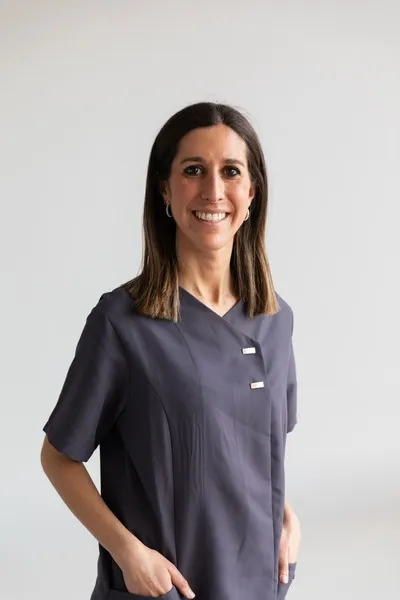
Your treatment is handled by a doctor who specializes in paediatric dentistry, trained specifically in this field and ready to handle the most complex cases.
Articles about paediatric dentistry
What our specialists say about this treatment.